
My Top Five Startup Lessons from Running a Marathon
16.06.2015
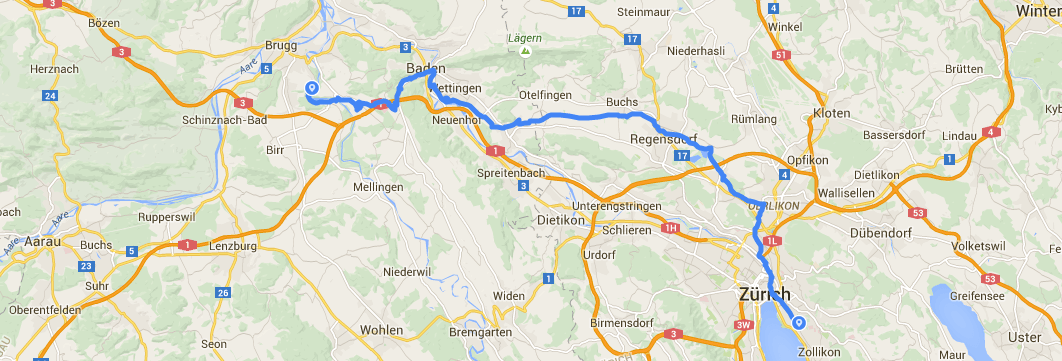
Almost exactly two years ago I ran a marathon alone. The long-term consequences of this marathon still concern me today, and I learned a lot about myself and my body in the process. Because a startup is not a sprint but requires at least as much endurance as a marathon, some of the learnings can be transferred to this. Here are my top 5 startup learnings:
1. It doesn't work without the right preparation
Unless I'm injured, I run a lot - if possible, I run twelve to 15 kilometers three times a week and climb around 400 meters in altitude. At some point along the way I decided that I would like to run a marathon - probably to prove to myself that I could easily complete the 42,195 km.
So I started to intensify my training and made sure I had the right diet: the evening before the marathon, a large portion of wholegrain pasta, bananas on the go, cereal bars, water and an isotonic drink. Without this snack, I would probably have had to give up on the way due to hypoglycemia.
In terms of startups, this means: You have to be aware that the road to success is very long and rocky. You should create certain financial cushions in advance in order to survive dry spells. It's important to pack your backpack with the right equipment, including a well-thought-out business plan, knowledge of the industry and startup strategies, capital, energy and motivation.
2. It can be done alone - but with support along the way it works better
I decided that I would run my marathon alone. I looked for a route that I already knew a bit and was about 45km long and set off one morning in June 2013 with my backpack packed.
Without the weight of the backpack, with other runners on the same route and with helpers handing you water bottles, I would have definitely completed the route 10-15 minutes faster.
It's similar with a startup: You can definitely do it alone, but in the (right) team you complement and support each other ideally and make faster progress together. You can find the right route in the right startup metropolis with a lively scene and a good ecosystem. You don't allow yourself to be intimidated by competition, you just push yourself like a fellow runner on the track. With the right helpers in the form of investors and coaches, many mistakes can be avoided. Take advantage of these offers!
3. From kilometer 30 onwards it gets really hard - or when you can't give up
The first thirty kilometers of my marathon were pretty easy. I was able to maintain my average speed well, every now and then I filled up my water bottle at a fountain and was amused when an older lady jogged next to me for a while and suddenly the announcement "30km in 2:49 hours" came from my cell phone. After that it got harder and harder: slowly but surely I couldn't feel my legs anymore, it started to drizzle slightly, and the backpack straps were rubbing on my shoulders.
After the initial euphoria of founding a startup, very hard times come. Maybe you're running out of money, the KPIs just aren't improving, or you need to change the strategy completely. Nevertheless, it's worth persevering and holding out until the next round of financing or the pivot. Usually after the "Valley of Death" there are rosier times again!
4. Celebrate interim successes!
A cheering audience on the side of the road might have encouraged me to increase my running pace a little. Positive feedback - as long as it is honest - and public support probably always helps. At Rayneer, we were among the winners or at least nominated several times in business plan competitions and often had positive feedback in the media. This motivated us to continue working at full speed and also showed us that our product is attracting attention. These small interim successes should be celebrated as a team; the Sirit will improve sustainably. There are plenty of days when things don't go particularly well.
By the way, after the marathon - despite extensive stretching - I had severe muscle soreness for two days ;-). I used this short break to relax in the sun and reward myself with a cold beer; and, of course: planning the next hardships.
5. Also think a little about the long-term consequences
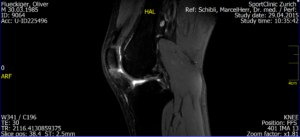
MRI of my knee - startup learnings from the marathon
At the end of August 2013, my right knee became noticeable for the first time. During a jogging trip I started to feel pain, which only got worse on the next few runs. This was followed by countless visits to the doctor and a total of 1.5 years of physiotherapy, culminating in an operation in November 2014 in which the plica was removed. However, I still feel pain; On the most recent MRI image, the specialist detects overloading of the kneecap. I had to stop my last attempt at jogging after 100 meters.
I believe that no one takes the risk of starting a startup if they first think through all the potential damage. That would also be the wrong approach. However, every founder should take some precautionary measures in case the startup does not thrive as expected. It's certainly worth making sure that you don't end up having to file for personal bankruptcy while heavily indebted, or that you don't completely neglect your social life by focusing on your startup.
What are your startup learnings from sports? Are we startupers all a little crazy or do we constantly want to prove to ourselves what we can do? I look forward to an exciting discussion here in the comments, on Facebook, Twitter or in person. I would be happy if you shared the post!