
Startup coaching in Ethiopia
15.09.2022
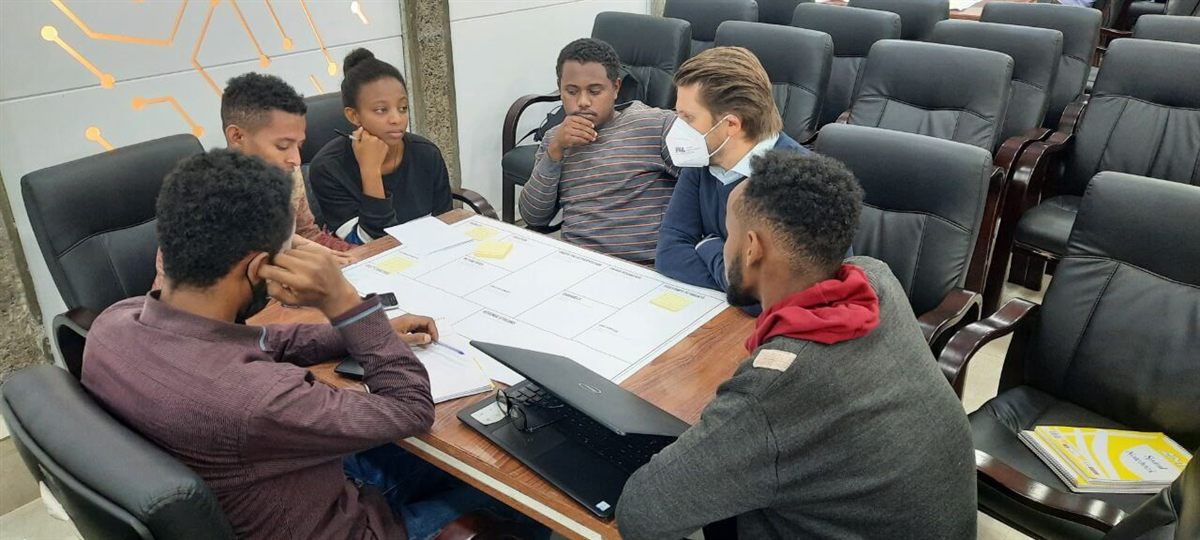
At the beginning of August 2022, I spent a few days in Addis Ababa, the capital of Ethiopia. There I coached startups on behalf of the Tesfa Ilg Foundation. The Swiss foundation has implemented a startup funding program for the first time. The aim of the program is to find promising entrepreneurs and to support them over a longer period of time in order to create jobs and thus prosperity.
Ethiopia is an exciting country: it is considered one of the countries of origin of modern humans. It was ruled by the Solomonic dynasty for 700 years; after a coup in 1974, a one-party socialist dictatorship ruled until 1991. A rebel alliance has been in power ever since. Ethiopia is the only country in Africa that was never colonized (the Italians tried twice).
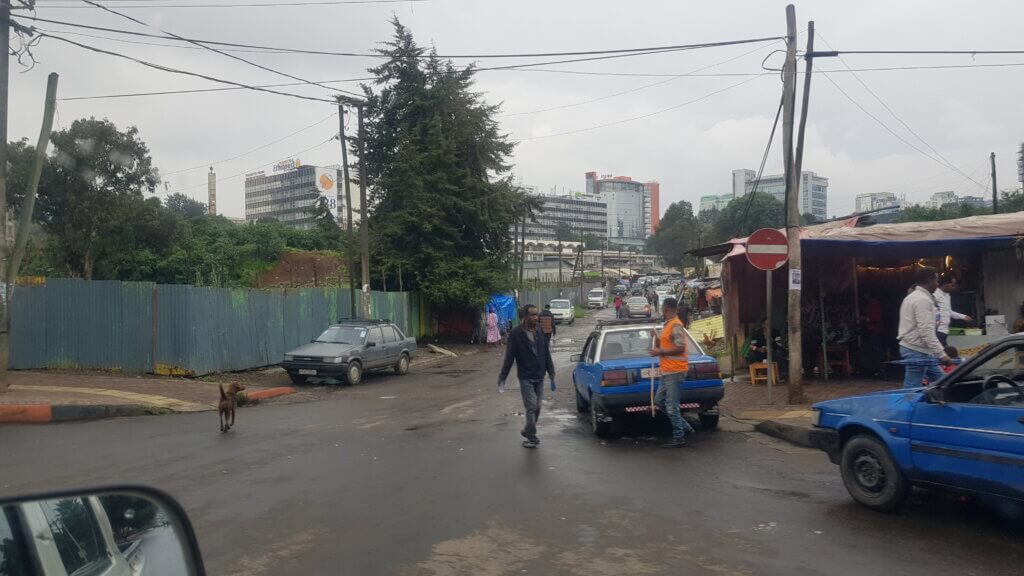
On the way to the Ministry of Innovation and Technology in Addis Ababa
The security situation is critical; Tensions regularly escalate with over 80 ethnic groups or neighboring countries (like just recently). The EDA warns against traveling to multiple regions, and in Addis Ababa armed soldiers can be seen on many street corners. In front of many buildings such as ministries, libraries or hotels you have to undergo a security check like at the airport.
Great poverty - and many Chinese investments
Ethiopia's population is very young. The GDP per capita is USD 961 (nom.), which puts the country in 169th place. On the streets of Addis Ababa you can see a lot of unaccompanied children, many probably homeless. In general, poverty is visible everywhere, even in the middle of the city there are many makeshift huts made of corrugated iron. The main roads are well developed, but other roads are unpaved and turn into streams during the heavy rains in the rainy season.
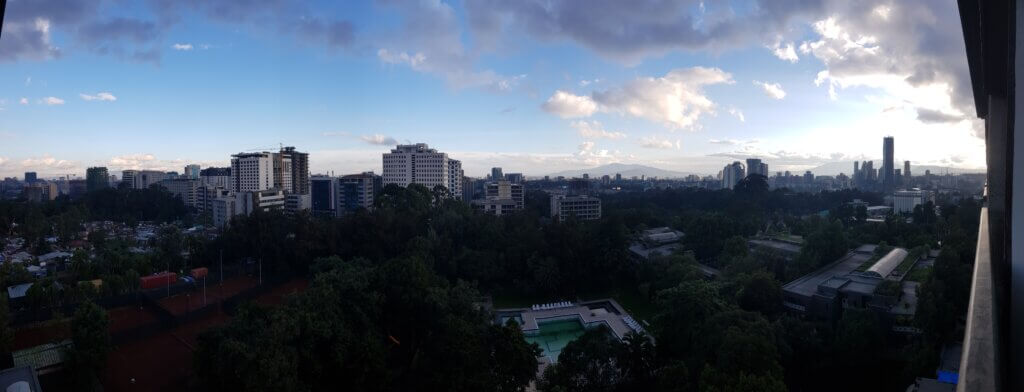
Addis Ababa skyline. Far right: Commercial Bank of Ethiopia skyscraper
On the other hand, the many new high-rise buildings are noticeable. These and other infrastructure projects such as the tram and modern parks were financed by China. At many construction sites there is a sign saying "China Aid for shared future". My interlocutors view this Chinese "help" quite critically, since the Chinese companies implement their projects with their own staff and there is no transfer of know-how - and the country, which is rich in raw materials, is in debt. I think I heard between the lines that Chinese investments are preferred over European NGOs. Many NGOs probably deliver what is not needed locally and expect eternal gratitude for it. Not only critical because of the colonial history of the Europeans.
Interesting collaboration with Ethiopian startups
The STEP program the Tesfa Ilg Foundation is loosely based on the Swiss “Venture” (which my startup Rayneer won in 2013). In the first phase, I was able to support eleven Ethiopian startups for a week in creating their pitch decks. I met many young, very motivated founders. Most of the projects were university spin-offs and therefore technically good, but often there was no well-thought-out business model. Working with the entrepreneurs was a lot of fun because they worked hard on their business models and - after initially being reticent - were also very willing to discuss things.
Many teams seem to be used to working with NGOs: Entrepreneurs have told me more than once off the record that they framed their business idea in such a way that it corresponded to the foundation's call for proposals. In the program, they wanted to win the prize money so that they could use it to implement the startup that they really believe in. Once again it has been shown that NGOs often do not start where it would make the most sense.
The five winning startups
On Pitch Day at the beginning of September, the jury selected the five most promising startups. In addition to USD 5,000, these startups receive further coaching and office space. The companies should be supported over a long period of time so that sustainable jobs can be created.
These startups were selected:
Great engineering
Over 30% of medicines sold in Ethiopia are counterfeit. Although there are very good test devices available on the global market, they are hardly affordable for African countries. Due to the armed conflicts, technology can only be imported to a very limited extent.
Grad Engineering has therefore developed a device that uses spectrometry and its own AI to detect counterfeit pharmaceuticals.
Lafain
Although the service sector is growing strongly, there are still a lot of farmers, especially in rural areas. Due to the very long supply chain from farmers through many middlemen to retailers, the costs are high.
Lafain has developed an integrated platform: employees harvest directly on the farm and deliver them directly to supermarkets.
Open
There are over 80 languages in Ethiopia font used is unique. For visually impaired people, Open has developed a stand-alone device that can read texts from books and magazines in local languages.
Omishtu Joy
The quality of the harvest depends largely on the soil on which the seeds are sown. The device from Omishtu Joy measures various values of a soil sample and displays the results in a smartphone app.
Sheba Bio Tech
Respiratory distress syndrome is a common breathing disorder in newborns. In order for the newborns to survive, breathing must be supported with ventilators (nCPAP). Such devices are not available in Ethiopia; instead, ventilators are often made from PET bottles. These are unsafe and unreliable.
Sheba Bio Tech has developed a cost-effective but safe alternative to expensive imported devices.